
The rules that apply to every box
- Use real moving cartons. Grocery boxes crush. Professional boxes are rated for stacking and come in sizes that match what goes in them.
- Heavy items in small boxes, light items in large boxes. A box should never weigh more than one person can carry comfortably.
- Fill every box to the top. Empty space lets contents shift; use crumpled paper to fill gaps so the lid closes flat and can be stacked.
- Tape the bottom in an H pattern — one strip along the seam and one across each end.
- Label every box on the top and one side with the room and a short list of contents. Mark fragile boxes on every side.
- Pack one room at a time and keep boxes from that room together.
Dishes and glassware
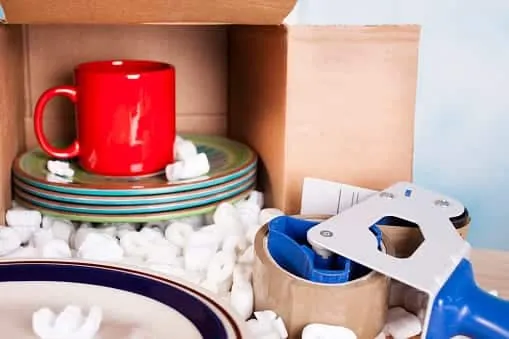
Use a double-wall dish pack. Put a thick layer of crumpled paper on the bottom. Wrap each plate individually and stand plates on their edges, never flat — they're much stronger that way. Bundle wrapped glasses and stemware with the heaviest pieces on the bottom, and use cell dividers when you have them. Fill every gap and add a cushion of paper on top.
Electronics
Photograph the back of every TV, receiver and computer before unplugging so you can reconnect it later. Label cables with masking tape and pack them in a zip bag taped to the device or its box. Use the original carton when you have it; otherwise use a padded TV carton and anti-static wrap. Back up computers before the move.
Furniture hardware
When you disassemble a bed, table or shelf, put every screw, bolt and bracket in a zip bag, label it, and tape it to the piece it belongs to. Nothing slows down reassembly like a missing bag of hardware.
Clothing and closets
Wardrobe cartons have a hanging bar so clothes go from closet to box to closet without folding. Fold what you can into medium boxes, and leave lightweight clothing in dresser drawers for local moves if your consultant says it's okay. Shoes go in small boxes or their original boxes.
Rugs
Vacuum, then roll the rug tightly with the pile facing inward and secure it with tape or rope. Have valuable area rugs professionally cleaned before the move; they come back rolled and wrapped, ready for the truck.
Lamps
Remove the bulb and shade. Wrap the base and pack it upright in a carton. Pack shades separately in a box lined with clean paper — never newspaper, which can rub off.
Books, files and heavy items
Small cartons only. Pack books flat or spine-down, alternate directions, and fill the box completely. Keep it under 40–50 pounds.
Pictures, mirrors and art
Use mirror cartons or have us build a custom crate for large or valuable pieces. Tape an X across glass, wrap in paper and bubble, and pack upright — never flat.
Kitchen and pantry
Tape lids on jars and put anything that can leak in a zip bag. Pack small appliances in their original boxes when possible. Use up perishables; they can't be shipped on long-distance moves.
What not to pack
Movers cannot transport hazardous materials: propane tanks, gasoline, paint thinner, aerosols, ammunition, fireworks, bleach, pool chemicals and the like. Carry important documents, jewelry, cash, medications, and anything irreplaceable with you.